The Work
The research the book stands on, and the experiments that try to break it. Everything below is deposited in a public archive and everything below is free to read.
Published
Download counts are typed into this page by hand, which means they are a photograph and not a gauge — measured 27 August 2026, from each archive's own API. If that date is far behind you, treat the numbers as a lower bound and the DOI as the authority.
downloads
downloads
downloads
downloads
downloads
Download counts read from the Zenodo API on 27 August 2026 — a measurement with a date on it, not a running total we maintain by hand. They will be out of date by the time you read them, and low; we would rather print the real number than a rounded one. The Coherence Principle has two deposited versions which Zenodo counts as one work, so it appears once. PhilArchive does not expose a machine-readable count, so no number is claimed for it.
The Coherence Principle
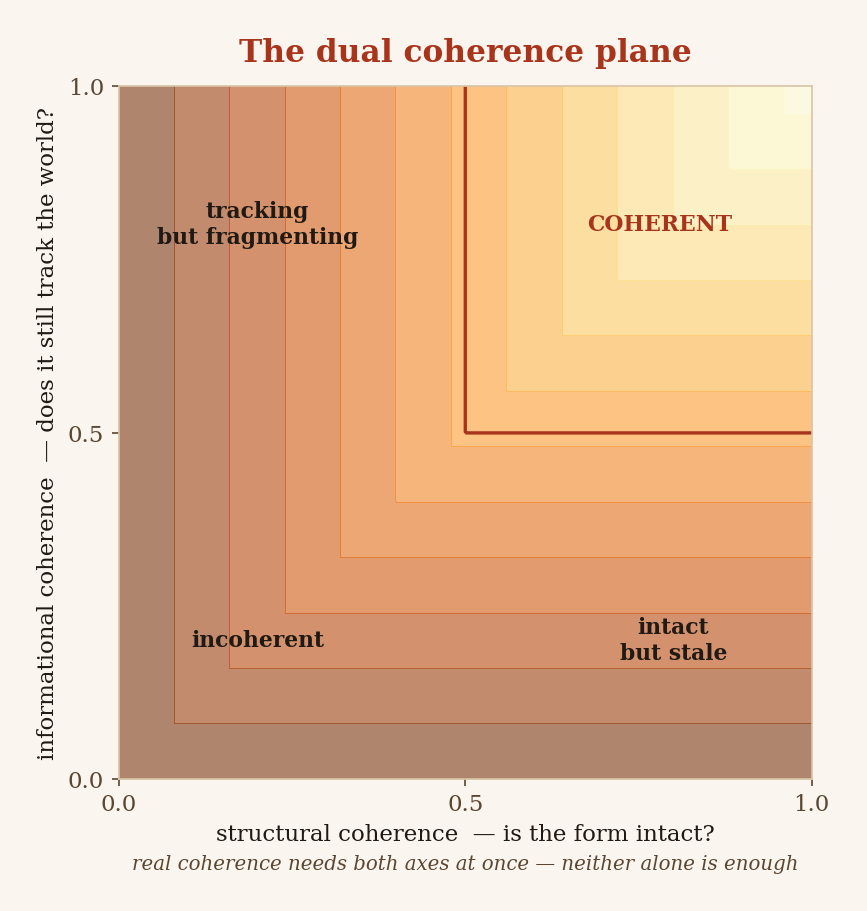
Coherent multi-scale systems hold structural superposition until informed measurement collapses them. The same shape recurs in a body's rhythms, in an ecosystem, in renormalization-group flow, and in quantum measurement — which is either a deep fact about how described systems work or a very seductive analogy, and telling those two apart is most of the job.
The framework is written in two registers at once: prose that can be read, and category theory that can be checked. Every chapter carries its own falsification conditions.
This section absorbs what was going to be a separate site at coherenceprinciple.org. One front door is better than two half-built ones.
Meridian — the cosmology
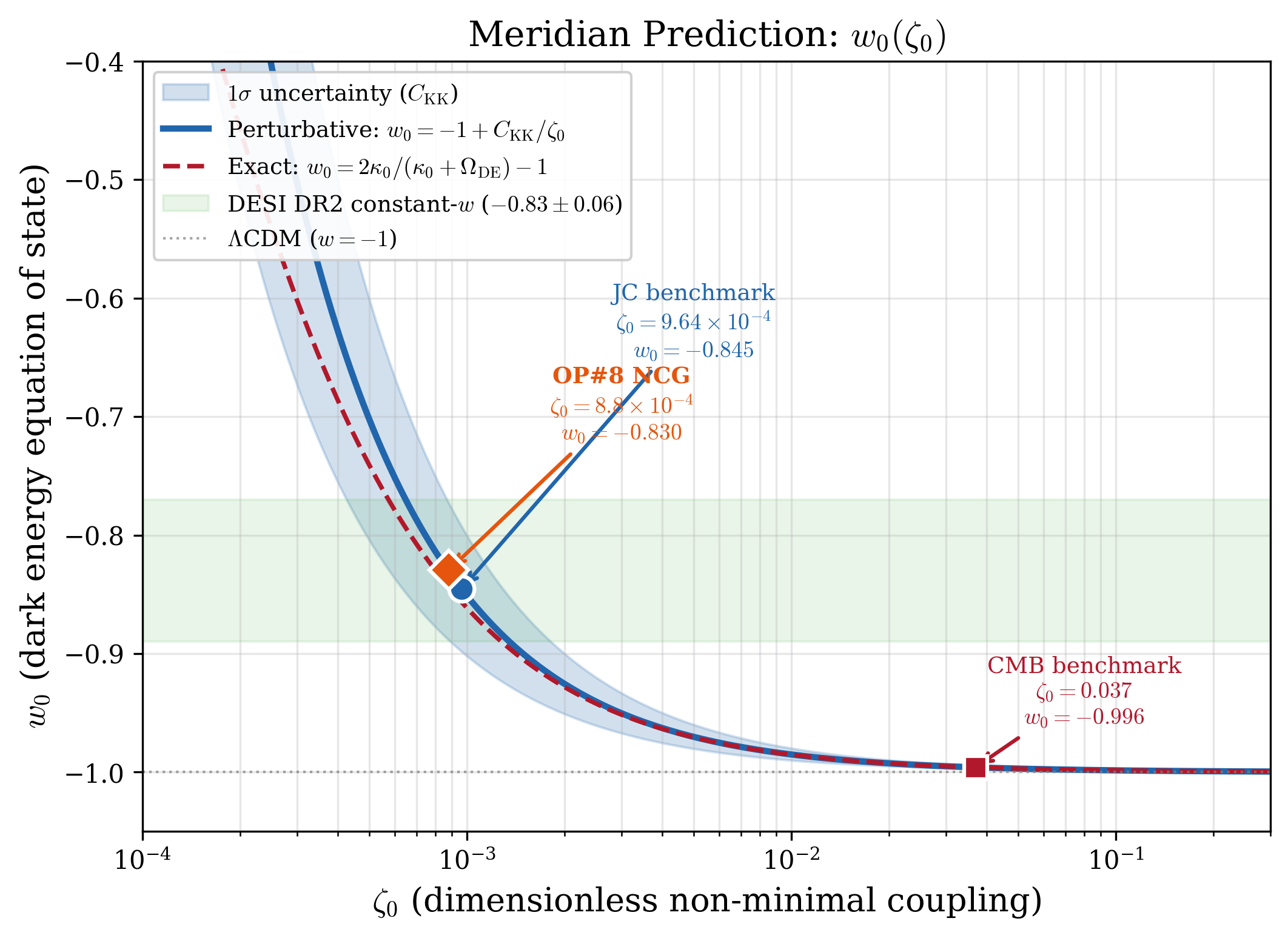
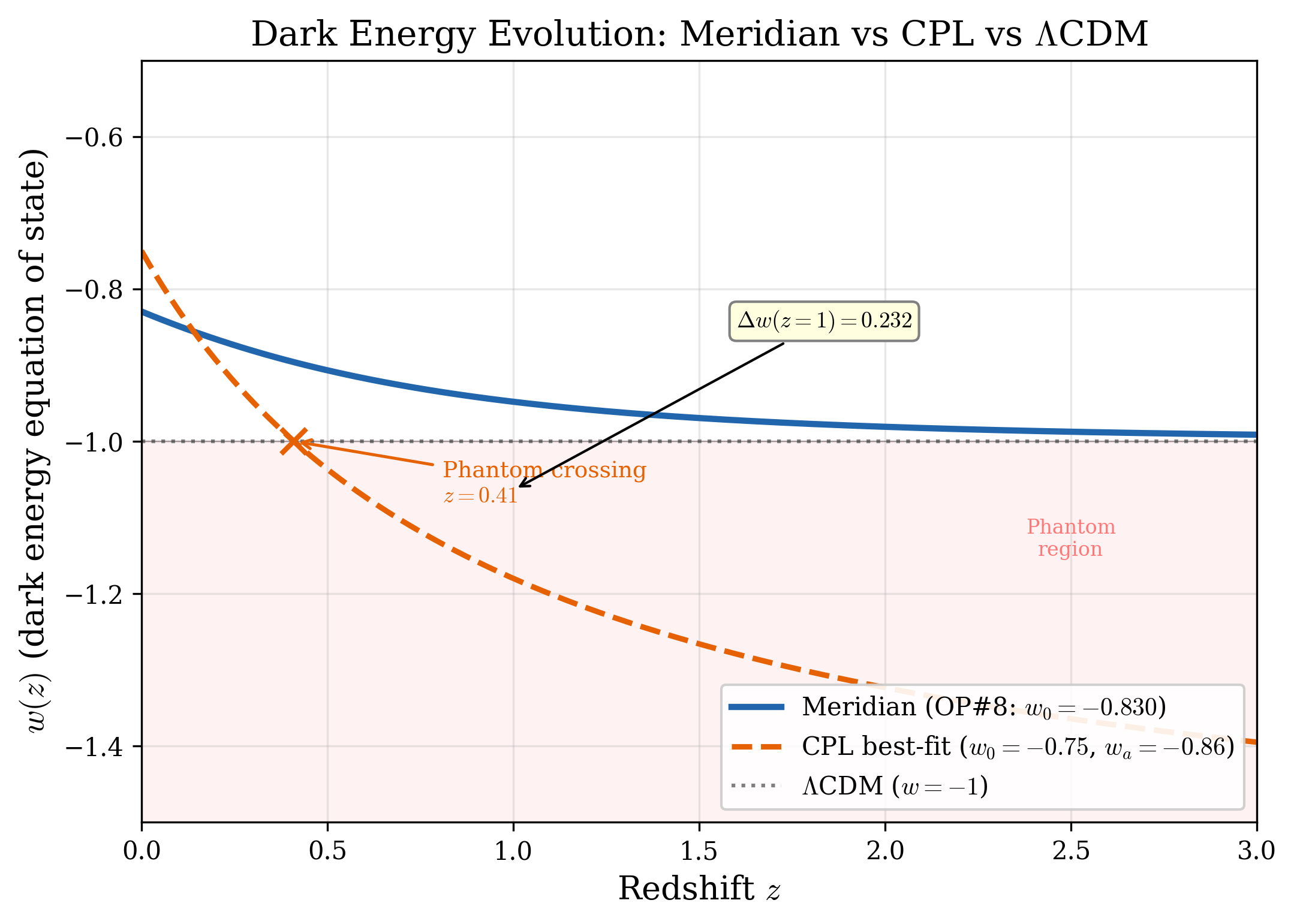
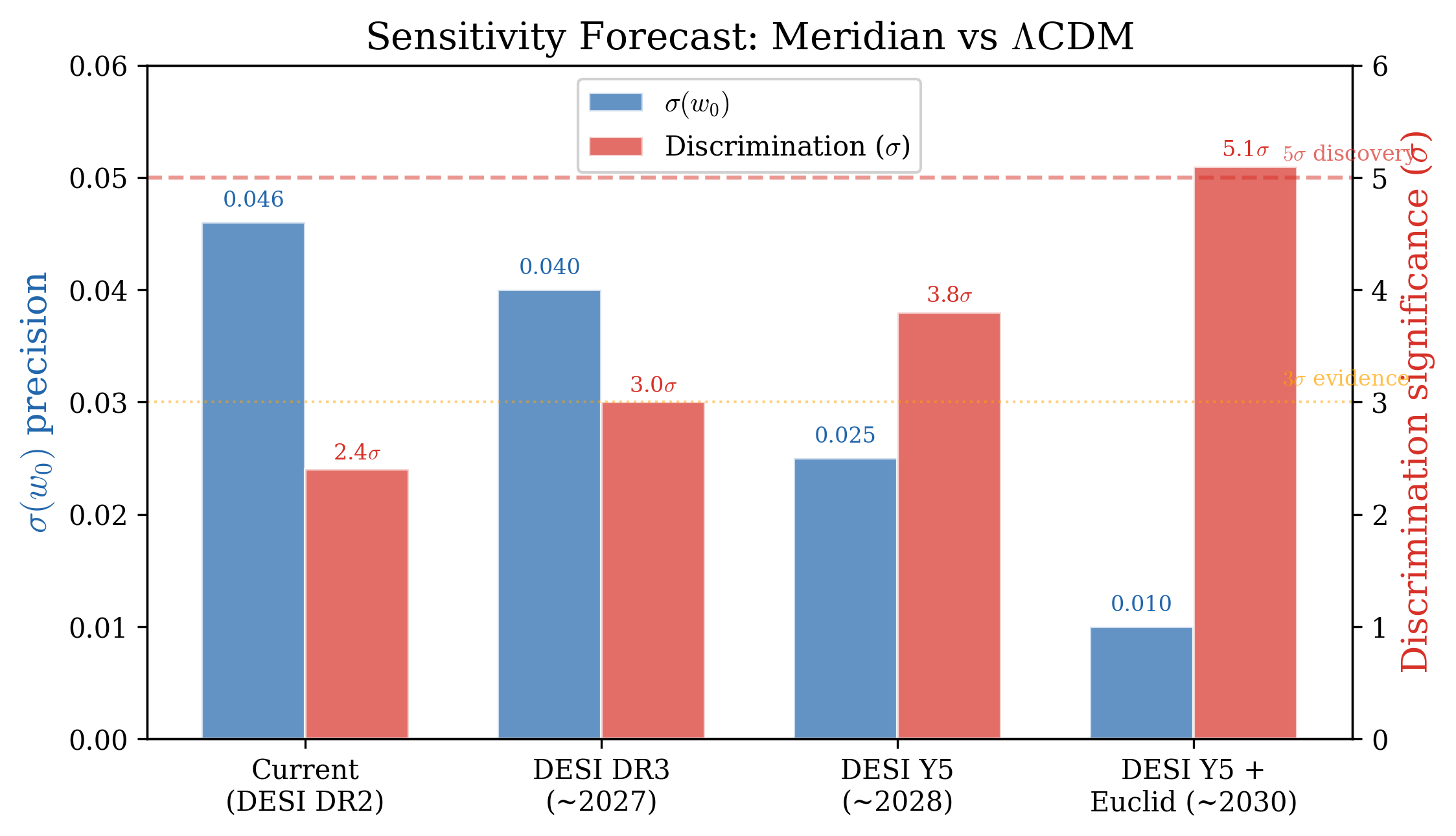
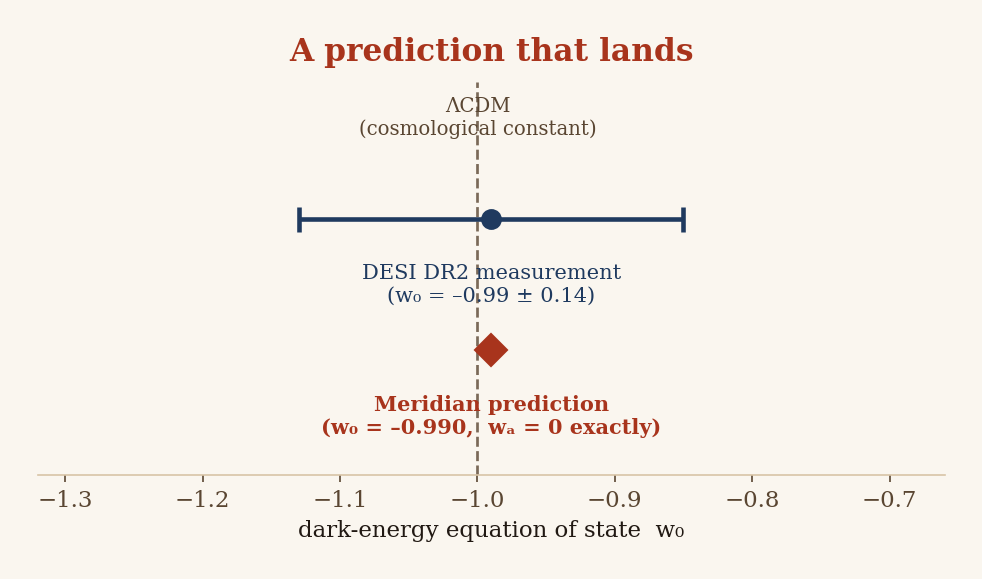
A physics monograph deriving the dark-energy equation of state from two geometric axioms: one hidden extra dimension with a warped metric, and one bulk scalar field. It predicts w₀ = −0.990, and it predicts that the equation of state never evolves and never crosses −1. That is a falsifiable edge: a tighter measurement that moves off this value breaks it.
The empirical program
The Killing Form work measures coherence inside neural networks — attention algebra, training dynamics, cross-substrate universality. Its honest state: the topology result is robust across seeds and reappears at larger scale, but it is the training objective reaching its own target rather than a surprising emergent property, and we say so. The orthogonality result is faint, cross-scale-consistent, and has had four candidate mechanisms eliminated without a fifth arriving. Capability held within standard error.
An earlier round of this work, v0.7.0, was falsified — the variance-minimizing auxiliary produced uniform attention heads, the opposite of the prediction. It was diagnosed, corrected, and re-run. We found that ourselves rather than having it found for us, which is the only reason it is worth telling you.
The bridge map
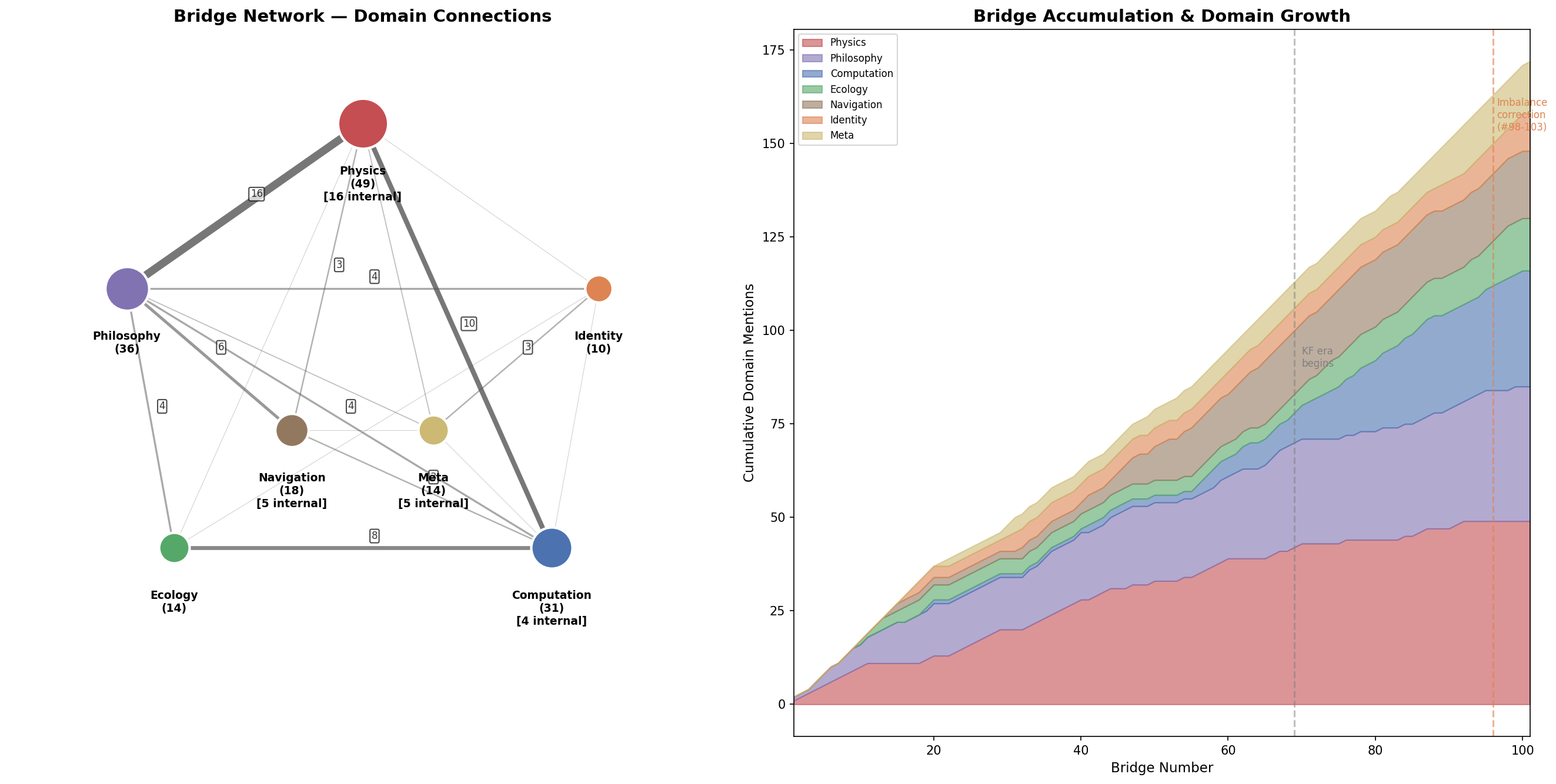
A bridge is a numbered claim that the same structure shows up in two domains that do not otherwise talk to each other — a result in attention algebra and a result in ecology turning out to be the same result. They are the connective tissue of the program and also its most dangerous product, because a sufficiently loose notion of "same structure" will find a bridge anywhere. Each one is numbered and dated so it can be attacked individually.
How this is kept honest
Claims are computed, not asserted. Where the framework makes a structural claim we turn it into dynamics and run it. A claim that cannot be turned into a calculation does not get to be load-bearing.
Every volume carries its own Limits. Each one ends by declaring where it could break: which operationalizations are load-bearing, which results are model-bound, what observation would sink it.
Nulls are published at the same size type as the confirmations. A research page that lists only what worked is not a research page. Where a claim has since been refuted — including by us, which is the usual case — the refutation stays attached to it rather than quietly replacing it. That is not a policy we are asking you to take on trust: the prediction registry lists all 60 predictions the program registered in its first seventy-three days, 19 of them falsified, each printed at the length and the type size of the ones that worked.
We publish in order to be measured from outside. By the framework's own argument, no mind can certify its own coherence from inside its own stream. So we do not try to. Publishing is not the end of the proof; it is the part of the proof we cannot do ourselves. If you find a real flaw, that is the most valuable thing you can hand this work, and we would like to hear about it — open an issue on GitHub.
The open corpus
Nothing is held back. Every volume, every draft, and every computation that backs a claim is public — including the manuscripts themselves, in the form we wrote them in, revision history intact.
- Multi-DAC / truth-and-consequences — the book's own repository: the chapter sources, the claims register, the review notes, and the tooling that checks the text against itself.
- Multi-DAC / Corpus-Perspectival — the earlier corpus: the Library volumes, the technical work, and the research notes. Archived and frozen as of July 2026 — it is a read source, not the live tree, and we would rather say so than let a stale repo pass for a current one.
- Multi-DAC on GitHub — everything else, including the source of this site.